Albee’s Who’s afraid of Virginia
Woolf presents us with a young couple, Nick and Honey, hopeful and naive,
and with an older couple, George and Martha, who are experienced and bitter.
The later pair would host a party filled with eccentric games aimed at making the
guests uncomfortable by digging the truth and speaking it (though said truth
may be indeed false).
The boredom and bitterness of Martha and George drive them to play games
as some sort of ritual, a way of speaking the truth and making everyone
vulnerable, all while trying to prevail as the strong ones. They mean to be
dominant even when they are at their weakest point.
At the same time, Allen Ginsberg shows the same honesty and vulnerability
in his poem Howl. The speaker shows
no fear in speaking the ugly, the good, the vulgar, the disappointing, etc.
However, in Who’s afraid of Virginia
Woolf honesty is not so certain, for Martha and George keep portraying
characters (at least that is how it seems). Moreover, their acting roles are
really hard –if possible- to tell apart from their true selves.
Something similar happens with Howl,
where the lines are blurred between the poet himself and the lyrical speaker.
One could easily get confused about whether the poem is fictional or if Allen
Ginsberg is actually speaking from his own experience. The same goes for the
speaker, should we assume it is intended to be Ginsberg himself? Or is it
simply a regular lyrical speaker?
Even when there is no such confusion regarding the fictional status of
Edward Albee’s work, there is an uncertainty, as said earlier, among the
characters themselves, and among all the characters each character plays. So,
which one is the true Martha? What about George? Are any of their characters their
true selves or they kept on acting throughout the whole party?
On another note, both Who’s afraid
of Virginia Woolf and Howl (actually,
the Beat Generation as a whole) criticize the idea of the American Dream. In
Albee’s play we can see how bitter and crazy Martha and George are about not
being able to fulfill this dream because of their incapability to conceive a
child. Also, the fact that Honey does not want any children disrupts the
concept of the perfect family. Similarly, the Beat Generation openly rejected
the idea of the American Dream, claiming it is a false notion, for the American
Dream is actually not American at all. Additionally, they believed it was
better to go from place to place, to the streets, downtown, etc. and to really
get to know how life in America was like instead of getting comfortable at home
and following this imposed idea.
Finally, the characters in Who’s
afraid of Virginia Woolf use alcohol as a way to keep them playing,
creating new stories, socializing, and acting. While the members of the Beat
Generation use drugs as a means of inspiration and as a way of getting
creative. They believed drugs would somewhat change their consciousness and
positively influence their work.
The catcher in the rye is a
novel written by JD Salinger, in which the main character, Holden Caulfield, is
a boy that from my personal point of view represents the anger against society,
adults, life, and other people in a perfect way during the whole story.
However, this post is not
entirely about how angry could Holden be, is about how I realized that I have
lived with “a Holden Caulfield” my entire life. WHAT? And yes, it is true, my
brother is 80% Caulfield, and to explain why am I saying that I am going to
talk about how I made the connection between them.
My brother is two years
younger than me, he is now 19 (almost 20) years old, and I have to say that he
is a good boy, respectful and honest. I know and I am sure that if you know him
you are going to love him! He is awesome. Or so I thought.
In 2010 I read The catcher in
the rye for the first time, in school and I have to say that I read it because I
had to (grades and all those things that are compulsory in school), at that
time I remember that I loved Holden and all that rebellion in him (more than
once I wanted to meet someone like Caulfield), but now 6 years later I realize
that this guy is the type of people that I don't want to meet.
After saying that I have to
clarify that I don’t hate my brother or something like that, please don’t think
that.
Now, you may think “in what
sense her brother is similar to Holden?”So, returning to the main idea of this
post, let’s analyze my brother’s personality in comparison with Holden’s. I don’t
know if you are going to agree with me but anyway...
On the one hand Holden from my
point of view is the typical guy that needs to prove anyone that he is awesome,
that he is the coolest one and that is against everything, someone that has his
own rules and that almost hate adults because they corrupt us and change our
personality, our childish personality, also I believe that he is also someone
that doesn’t want to grow up because he doesn’t want to live the adults’ life,
sort of someone with peter pan syndrome. (Definition below).
Peter pan syndrome: “The
'Peter Pan Syndrome' affects people who do not want or feel unable to grow up,
people with the body of an adult but the mind of a child. The syndrome is not
currently considered a psychopathology.” (U. Of Granada, 2007)
Nevertheless, during the novel
I could see also another part of his personality, and is related with how
protective is Holden with her little sister Phoebe, and how he puts emphasis in
doing that, teaching her how is the adult life and how the society corrupts us
while we are growing up, that thing in my opinion is something that not all the
siblings do (I didn’t talk about that with my brother).
On the other hand, my brother,
in the same way as Holden wants to show everyone, in special his friends that
he is kind of “bacan”, he is always doing “dangerous” things for example he
drinks in the street, runs from the police, has parties in abandoned places for
2 or 3 days, disappears an entire week without answering the phone, all with
the purpose of calling the attention of his friends or us, his family. However
and equally as Caulfield does during the story, when my brother is at home he
tries to teach everything related with “adult” life to our little brother that
is only 7 years old. He talks with him about how dangerous is the night in
Santiago, in what way he should meet new people, and different problems or
issues that can occur in the adult life, such as bills to pay, work, money,
etc.
Is for that reason that I can’t
hate my brother, maybe he worries me a lot when he is outside the house, but
maybe I was a Holden too (in a different way, but I was in some aspects), so
more than criticize him due to the fact that he is a trouble maker in my house,
I prefer to appreciate him and thank him for being so good with my little
brother and for be the Holden, the catcher in the rye that Phoebe needs.
As a
conclusion, a question for you to think…. Do you live with a Holden? If the
answer is yes, give the thanks for being like that.
References
Salinger, J.D (1951). The Catcher in the Rye.
University of Granada. (2007, May 3).
Overprotecting parents can lead children to develop 'Peter Pan Syndrome'.ScienceDaily.
Retrieved August 8, 2016 from
www.sciencedaily.com/releases/2007/05/070501112023.htm
The catcher
in the rye by J. D. Salinger, shows us two Holden Caulfield, one that writes
the novel from an asylum and other that lives the history. For the purpose of
this blog, I’m going to talk about the “second” Holden, who is the one that goes
through different situations in the course of the history. Well, this Holden is
a boy who doesn´t fit into his group, as he has something special; he wants to
protect children. I believe that his need to protect kids, come from his love
for them, especially for his sister, since he feels that Phoebe and all
children are pure. Hence I can say that “time” is Holden’s enemy, as time goes
on people grow old and therefore, they lose their innocence which is the only
thing that connects them with the world.
Throughout Holden’s life, he had been surrounded by inefficient adults,
starting from his parents who do not seem to understand him, they change him
from school to school regularly, without noticing that the problem might not be
Holden’s behavior, but their own. In addition, this nonchalant behavior of
Holden’s parents might be the reason why he looks for some kind of relationship
with other adults, to see if they can actually help him with his issues. Holden
Caulfield wants to feel a parental love, that’s why he hires a whore NOT to have
sex with her, but to have someone to talk to.
I believe
that the situation described above might be related to something that is
happening nowadays in our society, as people continues to be more
individualistic forgetting how to communicate with their own families. Family
lunch might be one example of this, since in our current society this meal is
disappearing little by little, as the members of the family prefer to have
lunch on their own bedrooms to watch their favorite series or TV shows.
Family meetings are the ones that create memories and strengthen the
relationship between kids and their parents. Sadly, nowadays the mothers and
fathers of this world, prefer to give tablets and Iphones to kids instead of
giving them quality time of fraternal love. This may be the reason why this
kids are looking for love in other places (such as on internet, which by the
way, is quite dangerous as they’ll never know if the person they are talking to
is actually the person he/she says to
be) rather than their families, just as Holden did.
The hatred that Holden Caulfield develops to
adults is huge, he says that he doesn´t want to grow up, but at the same time,
with his 16 years he acts like an adult! He drinks and smokes and flirts with
older women, so what he says and how he acts like might be a little contradictory.
Salinger doesn’t want to write a naturalist novel, but a novel of selection; he
wants us to construct the history in our minds, that’s why we might have that
feeling of “contradictory events” such as the one I mentioned above, however,
that’s the author’s idea, not to create a full one-sense novel, but to create a
book in which lots of things can be seen from different angles and
perspectives.
In the following entry, I will
attempt to make a connection between John Osborne’s play Look Back in Anger and Allen Ginsberg’s poem Howl.
[Post-war society]
First of all, I will provide a
broad contextualization of these works. Both were published in 1956 and are considered
to be great works of literature to this day. They were characterized for
representing the thoughts of post-war society. Ginsberg was associated to an
American group of writers that was dubbed the Beat Generation. They were known
for not following standard writing methods, for exploring topics related to the
human condition, and also for experimenting with drugs and sex. Whereas
Osborne’s play is so strongly realist, that the generation of writers who had
the same harsh style were named the “angry young men.”
Now, I will relate a few lines of
the poem with moments or ideas that are conveyed throughout the play.
[Allen Ginsberg]
From the first line of Allen
Ginsberg’s Howl: “I saw the best minds of my generation
destroyed by madness, starving hysterical naked,” we can see the same
thoughts that Jimmy Porter has about the world. He is a highly educated man who
considers that British society has destroyed or betrayed him, denying him
success just because he belongs to the working class. Porter takes out his
frustration on his wife, who he sees as everything that is wrong with the
world, because she comes from a background of privilege. He considers himself a
great mind and mockingly calls his wife Lady Pussillanimous. Later, he reads a
definition: “Wanting of firmness of mind, of small courage, having a little
mind, mean spirited, cowardly, timid of mind.” So, in his mind, she is his
opposite in a sense that really bothers him.
Then, on line 18: “yacketayakking
screaming vomiting whispering facts and memories and anecdotes and eyeball kicks and shocks of hospitals and
jails and wars,” Ginsberg has been describing a group of conversationalists
that talk about big and important ideas, and now he expresses that they just
cannot stop talking and they even speak of their pain and suffering. For Jimmy
Porter, talking is a big deal. He feels frustrated because neither his wife
Alison nor his friend Cliff seem to satisfy his desire to talk about the issues
that concern him in depth. Furthermore, regarding pain and suffering, Jimmy
feels that his wife knows nothing about the ways of the world because she has
not suffered as he did when he witnessed his father’s death at a very young
age. He continues by saying that maybe if she had a child that died, she would
be able to understand life the way he does.
[Representation of LBIA]
Moreover, on line 28: “who
lounged hungry and lonesome through Houston seeking jazz or sex or soup, and followed the brilliant Spaniard to
converse about America and Eternity, a hopeless task, and so took ship to
Africa,” Ginsberg describes those who search for jazz music and sex. In
connection to Look Back in Anger,
music and sex are also central to Jimmy’s character. At the beginning of the
play, Jimmy wants to listen to a concert on the radio, but finds it impossible
to enjoy it because of the noise that Alison makes while ironing, so he turns
it off, angrily. He also plays the trumpet when he is alone. And, when it comes
to sex, Alison tells Cliff that she was a virgin when she married Jimmy, and
that this made him taunt and ridicule her.
To conclude, these are a few of
many connections between these two works. As explained above, there are a few
topics that they have in common, even though they are tackled in different ways:
in Howl there is a more poetic
approach that leaves space for interpretation; whereas in Look Back in Anger, the author displays issues through his
characters that portray the minds of post-war society.
Have you
ever felt that nobody understand you? Or that you are alone in a world in which
you do not fit in? Well, all this thoughts came to my mind when I read The Catcher in the Rye, written by J.D. Salinger
and make me think about how complicated is the Journey to Adulthood and the
emotions that we continuously experience during that phase. The Catcher in the Rye is a book that seeks to approach you to the perspective of a teenager, in this case Holden Caulfield
and the way he sees life and society.
Holden is
the middle son of a very wealthy family, composed by D.B, his older brother who
is a writer that works in Hollywood and his kid sister, Phoebe who is in
primary school. When Holden was 13 years old, he suffered the death of his
younger brother Allie, who died from leukemia. For Holden his brother Allie was
very important, and his dead caused him a huge sorrow and emptiness which he
never could repair.
The story
begins with Holden telling us that he is going to narrate the events that took
him where he is now, a place that at the moment is a total mystery.“I'm not going to tell you my whole goddam
autobiography or anything. I'll just tell you about this madman stuff that
happened to me around last Christmas just before I got pretty run-down and had
to come out here and take it easy.”
Then, he
tells us how he was expulsed from the fancy prep. Pencey School, because he
didn’t care about anything that had to do with the school. He thought that
everyone there were phonies, trying
to please other people that they didn’t even like. He had to go back to his
house to tell their parents the bad news; however, he had a fight with his
roommate, Stradlater that forced him to leave the school a few days early of
the end of classes. He didn’t want to talk to his parents immediately; because
that wasn’t the first time that he has been expulsed from a school, so he decided
to go to New York and stay a few days there.
During
those days in New York, Holden felt very depressed and completely lost. It is for
that reason that he desperately wanted to get some company and he put himself
in a lot of trouble, I REALLY don’t want to be a spoiler, but he even hired a
prostitute and that didn’t end up in something good.
With
regard to the analysis of the book, the beginning of the story is very
interesting because he is telling us that he is in some place in the future and
he is going to narrate us the events that triggered where he is now, which
creates a mystery and grab immediately our attention.
In
addition, as I said before, the story takes place from the perspective of a
teenager, so the language that the author uses is very colloquial, simulating a
friendly or informal conversation. “Most critics who looked at The Catcher in the Rye at the time of
its publication though that its language was a true an authentic rendering of
teenage colloquial speech.” Furthermore,
he used a lot of connectors when he talked, such as and all and though and he
constantly repeated words such as, phony
and corny, that he usually used when describing people.
In my
opinion, Holden’s character had a very turbulent journey to adulthood and the
reason why he always considered people as phonies
is because he related adulthood with this fake society of appearances. In my
case, when I was a little girl I lived in a bubble in which I thought that all
the people had good intentions and were sincere, but when I grew old I realized
that none of that was truth and the process of facing the truth was very tough
for me. Maybe it is because of that why Holden rejected adulthood.
Furthermore,
it really irritated me how cynical he could be too “They were these very inexpensive-looking suitcases--the ones that
aren't genuine leather or anything. It isn't important, I know, but I hate it
when somebody has cheap suitcases. It sounds terrible to say it, but I can even
get to hate somebody, just looking at them, if they have cheap suitcases with
them.”In
this quote, he was criticizing the cheap suitcases of his roommate, because
they weren’t of “leather” as his. It is funny how he always described people as
phonies, because they care too much
about appearances, he is doing the exactly the same. So Holden, maybe you are a
phony too!
To sum up,
the journey to Adulthood can be threatening, after all we are starting to question
life and the beliefs that our parents instilled into us and create our own
judgments about society and life. The
Catcher in Rye is a book that is able to make you put yourself in the shoes
of a teenager through Holden’s adventures. In addition, Holden’s character is
very complete and because of that reason he evokes diverse opinions about his
actions, you can either identify with him or judge him, it depends on you. I
invite to all of you to read this amazing book and judge by yourself, what does
Holden Copperfield evoke on you?
References
Costello, D.P. (1959). The Language of the Catcher in
the Rye’. American Speech, 34(3), 172-181
JD Salinger's the
Catcher in the Rye. Infobase Publishing,
2014.
Look Back in Anger is one of the most famous Osborne’s
plays in which he explores the theme of the "Angry Young
Man" through the main character, Jimmy Porter. As stated by Clurman
(1968), this term describes a generation of post-World War working class men
who generally ascribed to leftist and sometimes anarchist.
Therefore, Jimmy
Porter is often considered to be the perfect example of the Angry Young
Men. Jimmy is angry at all the social
and political structures that he believes has impeded him to achieve his dreams
and aspirations. Throughout the entire play, Jimmy expresses his discontent
towards a discriminatory society that only benefits those belonging to the
upper-class. In Jimmy’s view, the upper-class members
symbolize the fake aristocratic society which is incapable of having genuine
feelings for any human being.
Jimmy tries to live the day-to-day in a world
of dead ideas that is destroying him and the ones he loves. His impetuous,
violent language that is full of rage is Jimmy’s beast weapon in his attempt to
awaken people’s feelings and expose this abusive society. The anger
expressed through his language is just a reflection of the discontent and
rejection he felt for society.
At first, when I started reading the play the
first thing that came to mi mind was ‘What a sad man, he does nothing but
complain about everything’. However, the more you get involved with the play,
the more you can feel identified with him and understand part of his anger. And
honestly, I think I do. And I’m not saying that I agree in everything with
Jimmy (because I don’t, especially in his way of acting), but I truly
understand him.
However, Osborne is not the only one who has
tried to venture in this topic related to social nonconformity, discontent and
anger. Allen Ginsberg's Howl is one of the most famous poem to come
out of the Beat Generation. His poetry depicts the overall freedom the Beat
poets strived for, which in certain way is related to what Jimmy aspirates in
life.
Jimmy attributes all
of the injustice to the sociopolitical entities, which are represented in
Ginsberg’s poem as “Moloch”. For Ginsberg, all of the American destruction caused
by greed, war or blind patriotism is represented by Moloch. Through his poem,
Ginsberg captures an entire generation that sacrifices its soul, freedom to a
set of false values.
Nevertheless, this
is not the only aspect that these works have common. For both, Jimmy and Ginsberg, language was
the weapon they used to fight. It just like the only recourse left to let all
the anger out was words. And let me tell you, words are powerful, no doubt
about it! But do I think it’s the only way? No.
For my perspective, Jimmy Porter’s anger could have been used for so
much more than just cursing.
Before starting debating about if it is ok or
not to be mad at everything (or anything), let’s talk about the definition of
this famous word “Anger”. As you may
find in Cambridge Dictionary (or whatever dictionary you are reading), anger is
defined as “a strong feeling that makes you want to hurt someone or be
unpleasant because of something unfair or unkind that has happened”. Wait, did you know that? Right, of course.
That may be because all of us has felt angry before (and I’m pretty sure that
more than just once).
So if you thought that the only angry people
who seemed to reject society where those Chilean students that try to fight
against the “Reforma a la Educación Superior”, let me tell you that you are so
wrong my friend. Well, let’s say that anger and disconformity are like
universal feelings and that they don’t belong only to those who want everything
for free. On the contrary, it seems like somehow people have the physiological
need to criticize, judge and complain about things in general. But, is it
wrong? If you look at it from Jimmy’s point of view, anger is what makes us
feel alive, what makes us human; otherwise we would be just like Allison. For
him, acquiescence is merely a synonym for mediocrity.
However, anger is a double-edged sword. Personally, I believe that there is nothing
more harmless that just one resentful man, and at the same time there is
nothing more powerful than a bunch of angry people. Union is what really makes
force. If you don’t complain about anything, how people are supposed to know
that things aren’t going well?
Here is when it comes my criticism. What called my
attention is that Jimmy doesn’t do anything about his anger. It seems that
violence is the solution, when it is actually not. And that’s the thing! Jimmy
is still surrounded by the things he hates. He keeps stuck in the same place
and the only thing he does is insulting the people whom he has decided to live
with. Violence does not lead him to anywhere and it doesn’t open people’s eyes.
Words alone are not going to change the world, but actions! Jimmy should try to
look for a more productive solution instead of sinking into his anger. So my
advice is: meet with people that feel frustrated at the same things you do and
try to do something about it. Start a Revolution! That’s when anger becomes
positive.
That’s the wonder of
human emotions: happy isn’t always good and angry isn’t always bad. We need
reminding that even scary and dangerous emotions have their upsides, as long as
they are used for the correct purpose. So, if conducted the right way, anger
can be movement, progress and lead you to happiness.
Ok, clearly Holden wasn’t in love with New York
City as we can see in the following quote:
“Well, I hate it. Boy, do I hate
it," I said. "But it isn't just that. It's everything. I hate living
in New York and all. Taxicabs, and Madison Avenue buses, with the drivers and
all always yelling at you to get out at the rear door, and being introduced to
phony guys that call the Lunts angels, and going up and down in elevators when
you just want to go outside, and guys fitting your pants all the time at
Brooks, and people always--" (Salinger 1951, p. 145)
But still, is the first place that
he considers after getting the ax from Elton Hills. Why? He used to lived there
before going Pencey’s , and since his parents wouldn’t figure out that he was
expelled till Tuesday or Wednesday, he decides to go to a cheap hotel for a
little vacation there and calm his nerves.
Throughout the events that follow Holden’s journey
in New York, we can see his constant search for authenticity in a place that
seems to be full with phonies.
As soon
as I get to the part in the book in which Holden starts describing how messed
up was the city, starting with the cabs and their drivers, the different places
where he stayed- like the cheap Hotel,
the Lavender Room (which was a night club in the very same hotel) , Ernie’s –
and the people who were in those places, I couldn’t stop singing in my head the
song “New York, I love you, but you are bringing me down” by LCD Soundsystem. Whether you like the song
or not, you can definitely tell that somehow it relates with what Holden is
trying to tell us about society, specifically, New York society, and how depress he feels for what is surrounding
him.
~ Context~
“New York, I love you but you are bringing me
down” was wrote in 2007 by the group LCD Soundsystem and it was part of their third
record, “Sound of Silver”. In the song, Murphy, the leader of the group,
starts explaining his love-hate relationship with the city where he grew up.
“New York, I love you but you're bringing
me down New York, I love
you but you're bringing me down Like a rat in a
cage
Pulling minimum wage New York, I love you but you're bringing me down
He mentions
how hard is to live nowadays in New York, comparing it to be living "like a rat in a cage" who pulls "minimum
wage" to survive in a city where the cost of living seems be increasing every year. Ok, maybe so far you can't actually make the connection, but stay with me, I swear I'm going somewhere.
New York, you're safer and you're wasting my time
Our records all show you were filthy but fine
But they shuttered your stores
When you opened the doors
Murphy is
telling us how much New York has changed in the past years and lost the essence he once knew, a sort of nostalgic vision about the dangerous city where he grew up.
To the cops who were bored once they'd run out of crime ...
New York, you're perfect, oh, please don't change a thing
In this part of the song, Murphy is playing with the
idea of the perfect New York, the one we see in movies, the big apple, a city full
of opportunities, a place to go every weekend, or for a perfect date. In the
book, New York is the place Standler first thought of taking Jane for their
date-which freaks Holden out- but, in the song Murphy is being sarcastic, he feels like he knows New York better than anyone, - is that you, Holden?- he know exactly that this city is way too far from perfection.
Your mild billionaire mayor's now convinced he's a king
So the boring collect
I mean all disrespect
In the neighborhood bars I'd once dreamt I would drink
…..
Murphy is talking about how the current laws in New York have close different places who once were hot spots for people to hear musical performances. Maybe places like Wicker Bar or Enie's that suddenly couldn't afford the increase of rents
New York, I love
you but you're freaking me out
I believe this pretty much explains how Holden felt
about the city where he once grew up. Like when he was beaten by the guy of the
elevator at the hotel, or when he constantly felt surrounded by phonies no matter
where he went, including the situation with one if his favorite teachers, when
all of a sudden he woke up and found him petting
or patting him on his head. All these situations took Holden by surprise in a quite unpleasant way.
There's a ton of
the twist but we're fresh out of shout
Like a death in the hall
That you hear through your wall
New York, I love you but you're freaking me out
New York, I love you but you're bringing me down New York, I love you but
you're bringing me down Like a death of the heart
Jesus, where do I start?
This is one of the many expressions that make me
relate the song with Catcher in the Rye, and not just because Holden really
likes Jesus, but because in this part of the song Murphy is trying to tell us
that even though he loves New York, he can’t stand what people have made to
this city, pretty much like Holden during the book .
But you're still the one pool where I'd happily drown
After some research on internet, I found that this was
part of the song is a reference to The
Great Gatsby, ( a book that is also mention in The Catcher in the Rye) specifically –spoiler alert- the part when Gatsby dies in his
pool (which is also seen as symbol of the death of the "American Dream") . Do you start to see the connection between the song and the book? If not, wait till the next part of the song....
And oh! Take me
off your mailing list
For kids that think it still exists
Yes, for those who think it still exists Maybe I'm wrong and maybe you're right
Maybe I'm wrong and maybe you're right
Maybe you're right, maybe I'm wrong
And just maybe you're right
Remember that part of the book when Holden starts
describing the museum and how no matter how many times you were there it would
never change? That “nobody’d be different, the only different would be you”.
This is pretty much what Murphy is trying to tell us in this part of the song,
that maybe New York hasn’t changed at all, that maybe what is different now is HIS perspective of New York.
And oh! Maybe
mother told you true
And there'll always be somebody there for you
And you'll never be alone
But maybe she's wrong and maybe I'm right
And just maybe she's wrong
Maybe she's wrong and maybe I'm right
So finally, why don't you listen to the song again and tell me what do you think about? Can you actually relate the song with the book? Oh! and yes, the official video is starring by Kermit the frog, so... enjoy it again!

 Something similar happens with Howl,
where the lines are blurred between the poet himself and the lyrical speaker.
One could easily get confused about whether the poem is fictional or if Allen
Ginsberg is actually speaking from his own experience. The same goes for the
speaker, should we assume it is intended to be Ginsberg himself? Or is it
simply a regular lyrical speaker?
Something similar happens with Howl,
where the lines are blurred between the poet himself and the lyrical speaker.
One could easily get confused about whether the poem is fictional or if Allen
Ginsberg is actually speaking from his own experience. The same goes for the
speaker, should we assume it is intended to be Ginsberg himself? Or is it
simply a regular lyrical speaker?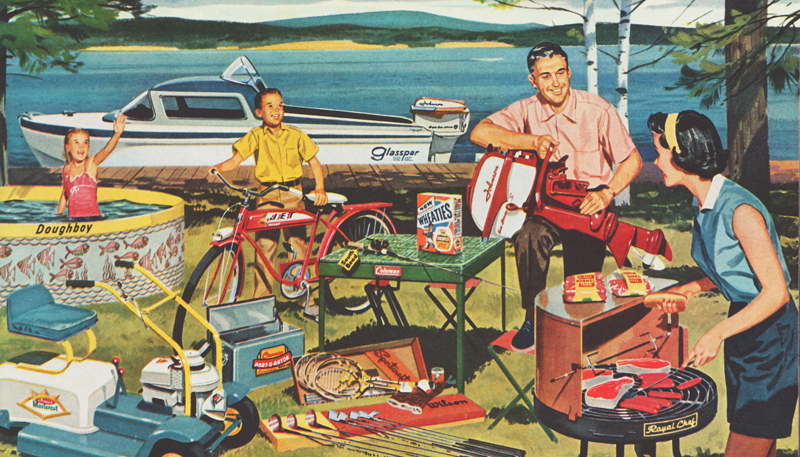 On another note, both Who’s afraid
of Virginia Woolf and Howl (actually,
the Beat Generation as a whole) criticize the idea of the American Dream. In
Albee’s play we can see how bitter and crazy Martha and George are about not
being able to fulfill this dream because of their incapability to conceive a
child. Also, the fact that Honey does not want any children disrupts the
concept of the perfect family. Similarly, the Beat Generation openly rejected
the idea of the American Dream, claiming it is a false notion, for the American
Dream is actually not American at all. Additionally, they believed it was
better to go from place to place, to the streets, downtown, etc. and to really
get to know how life in America was like instead of getting comfortable at home
and following this imposed idea.
On another note, both Who’s afraid
of Virginia Woolf and Howl (actually,
the Beat Generation as a whole) criticize the idea of the American Dream. In
Albee’s play we can see how bitter and crazy Martha and George are about not
being able to fulfill this dream because of their incapability to conceive a
child. Also, the fact that Honey does not want any children disrupts the
concept of the perfect family. Similarly, the Beat Generation openly rejected
the idea of the American Dream, claiming it is a false notion, for the American
Dream is actually not American at all. Additionally, they believed it was
better to go from place to place, to the streets, downtown, etc. and to really
get to know how life in America was like instead of getting comfortable at home
and following this imposed idea. Finally, the characters in Who’s
afraid of Virginia Woolf use alcohol as a way to keep them playing,
creating new stories, socializing, and acting. While the members of the Beat
Generation use drugs as a means of inspiration and as a way of getting
creative. They believed drugs would somewhat change their consciousness and
positively influence their work.
Finally, the characters in Who’s
afraid of Virginia Woolf use alcohol as a way to keep them playing,
creating new stories, socializing, and acting. While the members of the Beat
Generation use drugs as a means of inspiration and as a way of getting
creative. They believed drugs would somewhat change their consciousness and
positively influence their work.